Discrepancy Theory is Mathematics, Computer Science, and Statistics
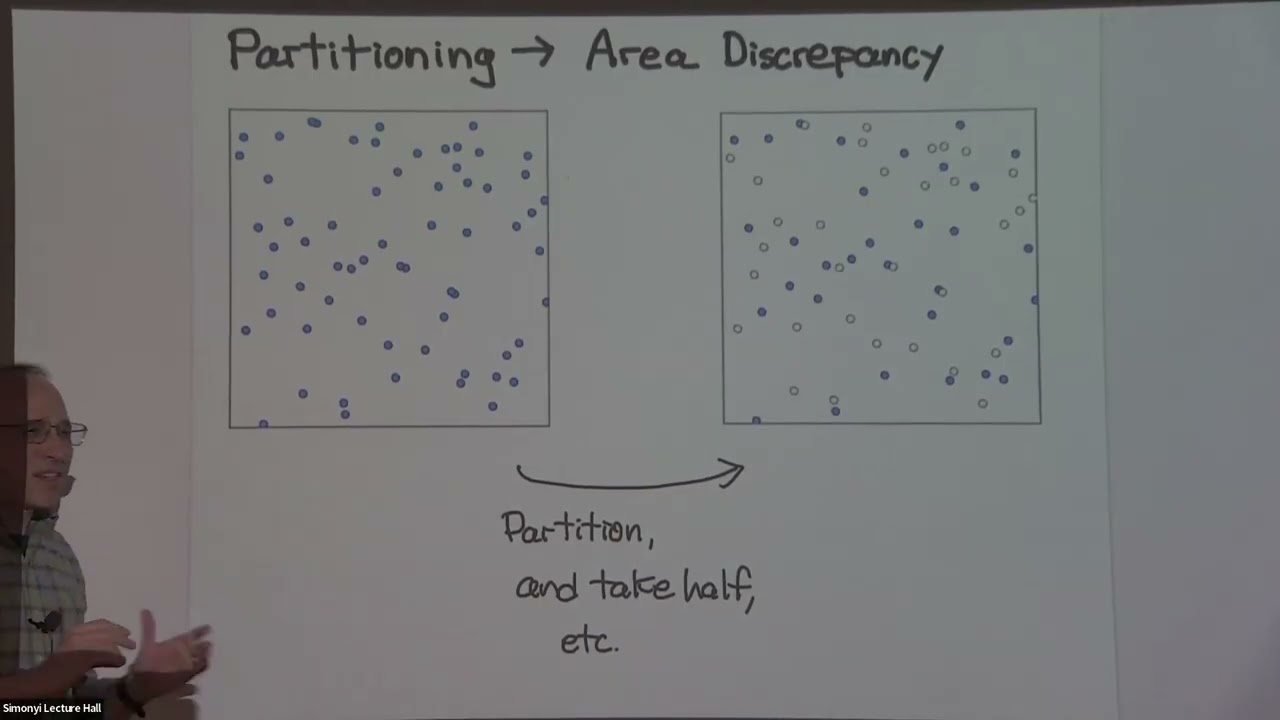
Daniel Spielman, a mathematician and computer scientist at Yale University, gives this Abel Prize lecture at the Institute for Advanced Study on discrepancy theory, a field he argues sits genuinely at the intersection of three disciplines rather than belonging to just one. He traces discrepancy problems from their classical roots in combinatorics and number theory, where the question is how evenly a set of points or a coloring can be spread out, through to their modern role in computer science algorithms and statistical experimental design. Spielman connects abstract existence results to concrete constructions, showing how techniques developed to prove bounds on discrepancy have found use in randomized algorithms and in balancing treatment and control groups in statistical trials. Delivered in Simonyi Hall to an audience of mathematicians, the talk moves from first principles to current research questions, making the case that the same combinatorial ideas keep resurfacing across pure math, theoretical computer science, and applied statistics.